 EN
EN  ES
ES Bomboná World
Full-grain leather: why every fiber matters
In the leathergoods industry there is a silent scale. Nobody announces it in catalogues, few brands explain it to their customers, but it completely determines the difference between an object that lasts decades and one that peels apart in two years. That scale is called leather quality, and at its peak sits full-grain leather.
At Bomboná we use exclusively full-grain leather. It is not a marketing decision. It is a decision of honesty.
What full-grain leather is
Full-grain leather is leather that retains the original surface layer of the animal’s hide — the epidermis and upper dermis — intact, without having been sanded, buffed or corrected to hide marks, scars or natural variations of the skin.
This fundamentally distinguishes it from other types of leather:
- Full-grain leather: The top layer is intact. The most resistant and the best-aging. Develops patina with use.
- Top-grain leather: The top layer has been sanded to remove imperfections. More visually uniform, but loses strength and the ability to develop patina.
- Corrected-grain leather: Sanded and then embossed with an artificial texture to simulate the natural grain. Cheaper, less durable.
- Bonded or reconstituted leather: Shredded leather fibers bonded with synthetic adhesives. Peels and cracks over time.
“Full-grain leather is to leather what an uncut diamond is to precious stones: more valuable for what has not been done to it.”
Why brands avoid it
The answer is simple: full-grain leather is difficult to work with and more expensive. By not correcting the surface, each piece shows the natural marks of the animal’s life — small scars, variations in tone, changes in texture. For mass production that requires visual uniformity, this is a problem.
The industrial solution is to sand the surface and apply a synthetic finish that hides all variation. The result is visually impeccable, perfectly uniform leather that looks “better” in the first few months. But that synthetic finish cracks. The dermis fibers, weakened by sanding, cannot withstand prolonged use. In two or three years, corrected leather begins to show its true nature.
Full-grain leather, by contrast, improves. The intact fibers of the upper dermis are dense, interlaced and naturally resistant to moisture and abrasion. With use, the leather absorbs the natural oils of the skin of whoever carries it, softens, darkens slightly and develops that characteristic patina that makes every piece unique and unrepeatable.
How to recognize it
There are practical ways to distinguish full-grain leather:
The water test: A drop of water on full-grain leather is slowly absorbed, leaving a temporary mark that disappears on drying. On corrected leather, the water slides off the synthetic finish.
The feel: Full grain has a slightly irregular texture, soft but with character. Corrected leather tends to be more uniform and can feel slightly plastic.
The imperfections: Seeing natural marks — small variations in tone, very fine wrinkles, minimal irregularities — is a good sign. It means the surface has not been altered.
The smell: Full-grain leather has a genuine, earthy and warm aroma. Leathers treated with synthetic finishes smell chemical or of nothing at all.
The leather from Nariño
Cattle raised on the highlands of Nariño, at more than 2,000 meters above sea level, produce leather with particular characteristics. The combination of highland pastures, cool climate and extensive rearing conditions — without overcrowding — results in hides with denser, tighter fibers than those of animals raised in warm climates or in confinement.
For Bomboná, working with Nariño leather is not only a decision of geographical proximity: it is a decision of quality. We know the tanners. We see the hides before buying them. We select only back leather — the dorsal zone of the animal, where the leather is thickest and most uniform — and we place it in the hands of artisans who know exactly what they are working with.
An object that improves
When you buy a Bomboná Carriel, you are buying an object in its initial state. Over time, with use, with care, it becomes something better. The patina it will develop over the next five years cannot be reproduced in any factory or simulated with any finish. It is unique. It is yours.
That is what full-grain leather does: it transforms time into value.
You might also be interested in
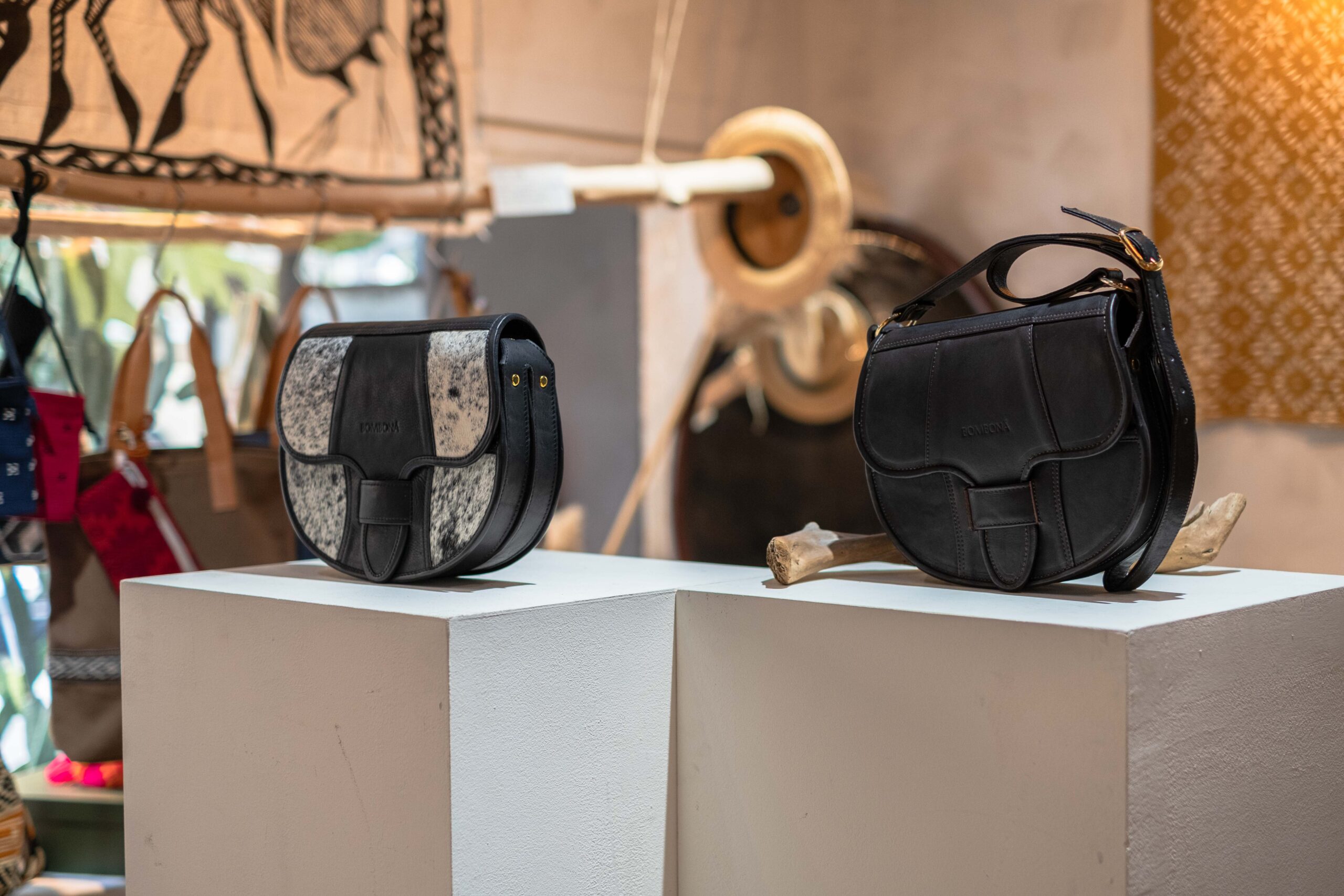
Bomboná World
How to care for your Bomboná Carriel so it lasts decades
A Bomboná Carriel is not a seasonal accessory. It is a piece made to...
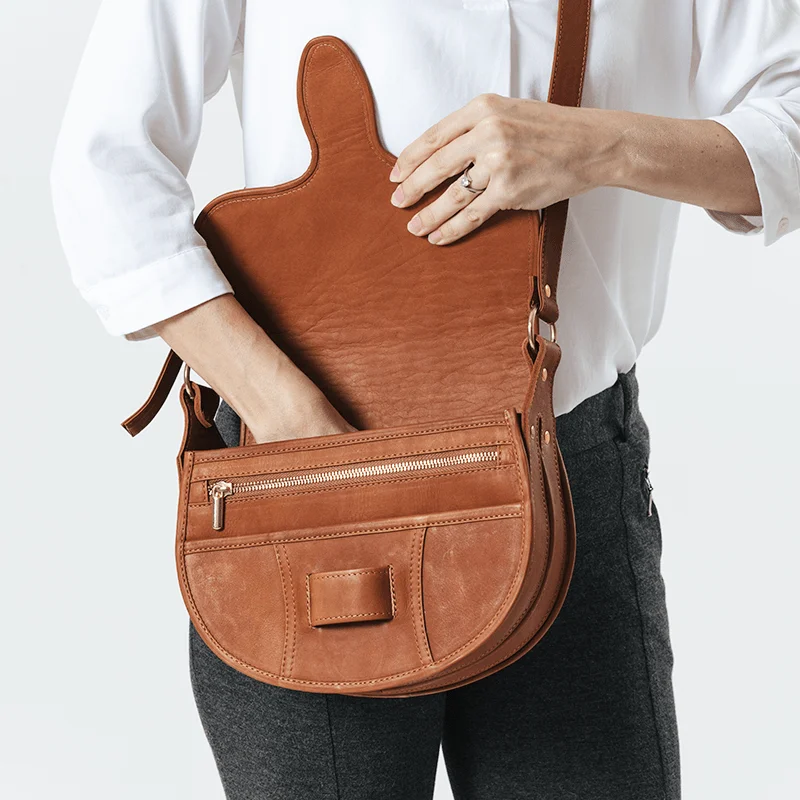
Discover Colombia
The Colombian Carriel: from the mountain trails to the world
Some objects transcend their function. The Colombian Carriel is not simply a leather bag:...